
London
Harold Cohen
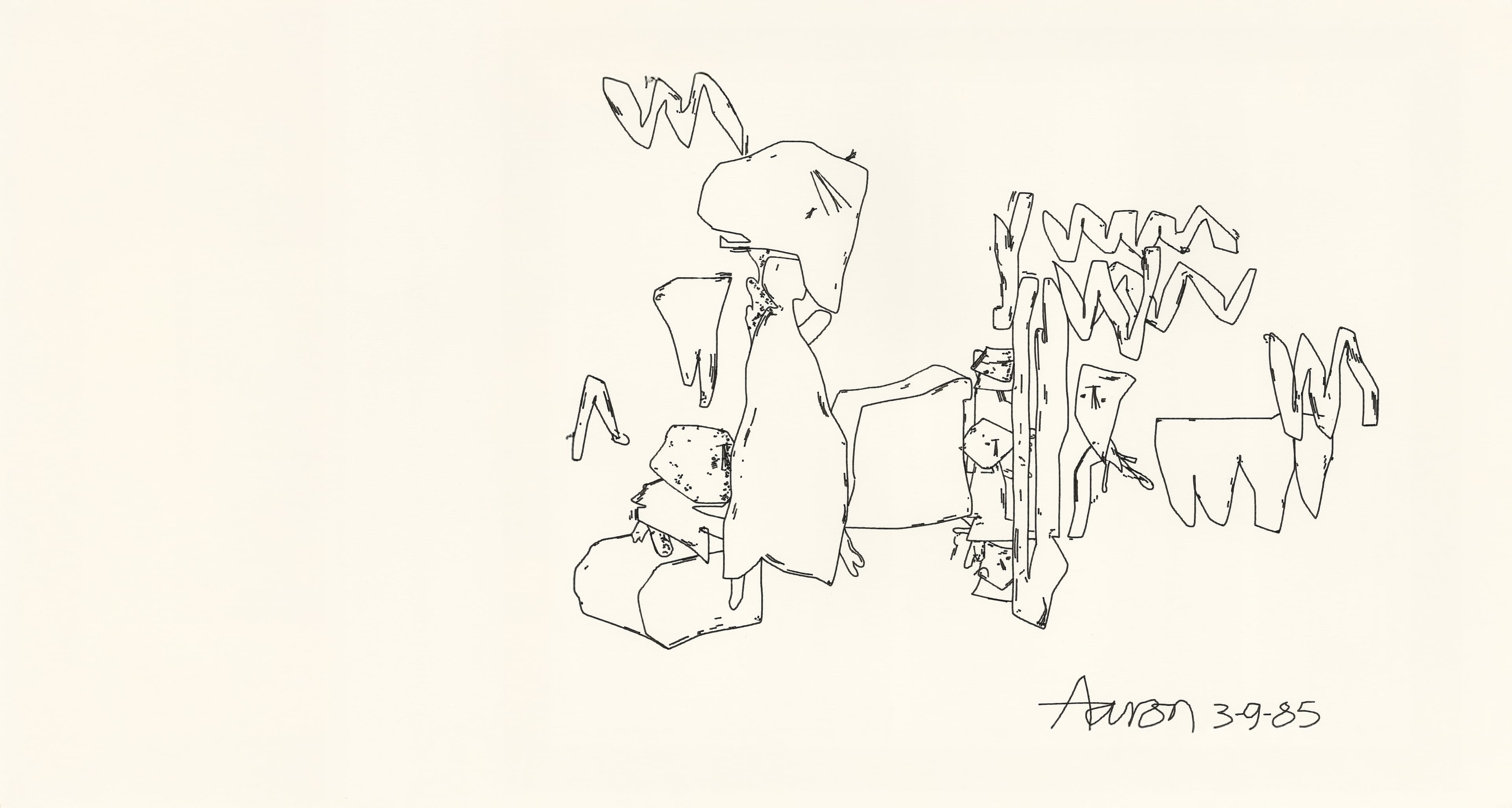
AARON at Tsukuba '85
Oct 16 - 28, 2025
Overview
"Well, I guess if it ever signed a painting on its own, that would signal the end of all debate on the matter of its intelligence."
- Harold Cohen

AARON at Tsukuba '85 - In collaboration with Gazelli Art House, Verisart and the Harold Cohen Trust.
Harold Cohen’s AARON at Tsukuba ’85 drawings are rare witnesses to the first sustained public presentation of autonomous computer art. Created live inside the U.S. Pavilion at the 1985 World’s Fair in Tsukuba, Japan, they were produced by Cohen’s artmaking programme AARON as visitors watched a mechanical plotter generate original ink drawings in real time. Guides explained that AARON “never draws the same drawing twice,” and the installation was singled out in the Pavilion’s report as one of its most popular exhibits.
Heads of state and royalty saw AARON at work. Prime Minister Yasuhiro Nakasone was photographed at the plotter, and Emperor Hirohito extended his official tour to ask questions, a rare protocol exception noted by Pavilion staff. Public response matched the VIP attention. In an open‑ended visitor survey conducted on site, AARON was the top specifically named favourite in the U.S. Pavilion.
What also set the Tsukuba works apart was their unusual inscriptions, which seemed to suggest the possibility of autonomous authorship. Contemporary Japanese press captured the moment with headlines about “computers as artists,” describing AARON as a system that “thinks while drawing.”